From Neon to Digital: A Conversation with Plastic Arts Signs’ Al Jacobi
The sign industry has seen significant change over the past few decades, from hand-painted faces and neon lighting to high-resolution digital displays capable of delivering dynamic, real-time content. On the latest episode of the Daktronics Experience Podcast, we sat down with Al Jacobi, General Manager of Plastic Arts Signs, to talk about that evolution and what it means for customers today.
Matt Anderson on 12/17/2025
Categories: Business & Community

A Business Built from the Ground Up
Plastic Arts Signs is a family-founded company with roots dating back to 1969. Al’s connection to the business started early, sweeping floors and learning the trade firsthand before eventually working his way through fabrication, installation, sales and leadership.
That full-spectrum experience gives Al a unique perspective on the industry. He understands not only how signs are designed and built, but also how they are installed, maintained and ultimately experienced by customers over time.
I was basically born into the company. I started out sweeping floors and learning anything they were willing to let me do.
The Shift from Neon to Digital
During the conversation, Al shared how signage has evolved from neon and embossed faces to today’s digital displays. Tighter pixel pitch, higher resolution and improved outdoor performance have opened the door for richer content and greater flexibility.
Customers are no longer limited to basic text messages. Instead, they can display photos, branding, social media content and detailed messaging that truly stands out. As Al explained, the quality of the content paired with the right display can create a powerful visual impact.
Nobody wants a 16 or 20 millimeter display anymore. Customers want higher resolution so they can show real, detailed content.
Designing for Consistency and Impact
One of the key topics in the episode was Plastic Arts Signs’ work with Pen Air Credit Union, a multi-location project focused on creating a consistent look and feel across branches.
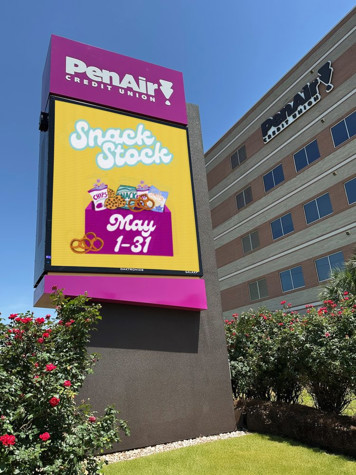
The goal was to move away from a mix of different sign types and sizes, and toward a unified design that could be easily recognized, regardless of location. By standardizing display resolution and layout, Pen Air was able to use the same content across multiple sites while still meeting local code requirements.
This approach helped streamline content creation and reinforced brand consistency, while still allowing flexibility as new branches were added.
The goal was to put the same content in front of people, no matter which branch they were visiting.
The Value of Seeing the Product in Person
Al also emphasized the importance of live demos when helping customers choose a display. While photos and specifications are helpful, seeing a display in person often makes the difference.
Being able to compare older technology side by side with newer displays helps customers understand what they are investing in, from image clarity to content readability. For many, that hands-on experience builds confidence and accelerates decision-making.
There’s nothing like seeing the product in person. That’s when customers really understand what they’re getting.
Reliability, Service and Long-Term Relationships
A major theme throughout the conversation was reliability and the importance of standing behind the product.
Al shared a story from early in his Plastic Arts Signs’ experience with digital displays, when an unexpected issue surfaced shortly after installation. Rather than applying temporary fixes, the issue was investigated, re-engineered and resolved with a long-term solution. That display went on to operate for many years before being replaced.
Experiences like that helped reinforce trust with both Plastic Arts Signs and their customers. As Al noted, challenges can happen with any technology, but how those challenges are addressed makes all the difference.
“We’re not perfect, but when there’s a problem, we fix it the right way and stand behind it.”
Looking Ahead
As customer preferences continue to evolve, Plastic Arts Signs sees increased interest in portrait-oriented displays, cellular connectivity and indoor video solutions.
“Everything is a cell phone in a hand now. Customers want displays that match how people consume content.”
These trends reflect how people consume content today and how digital signage continues to expand beyond traditional applications.
The conversation with Al highlights a simple truth: successful digital signage projects combine technology, thoughtful design and strong relationships.