From Mountain Tunnels to Historic Train Stations: Two Remarkable Display Projects
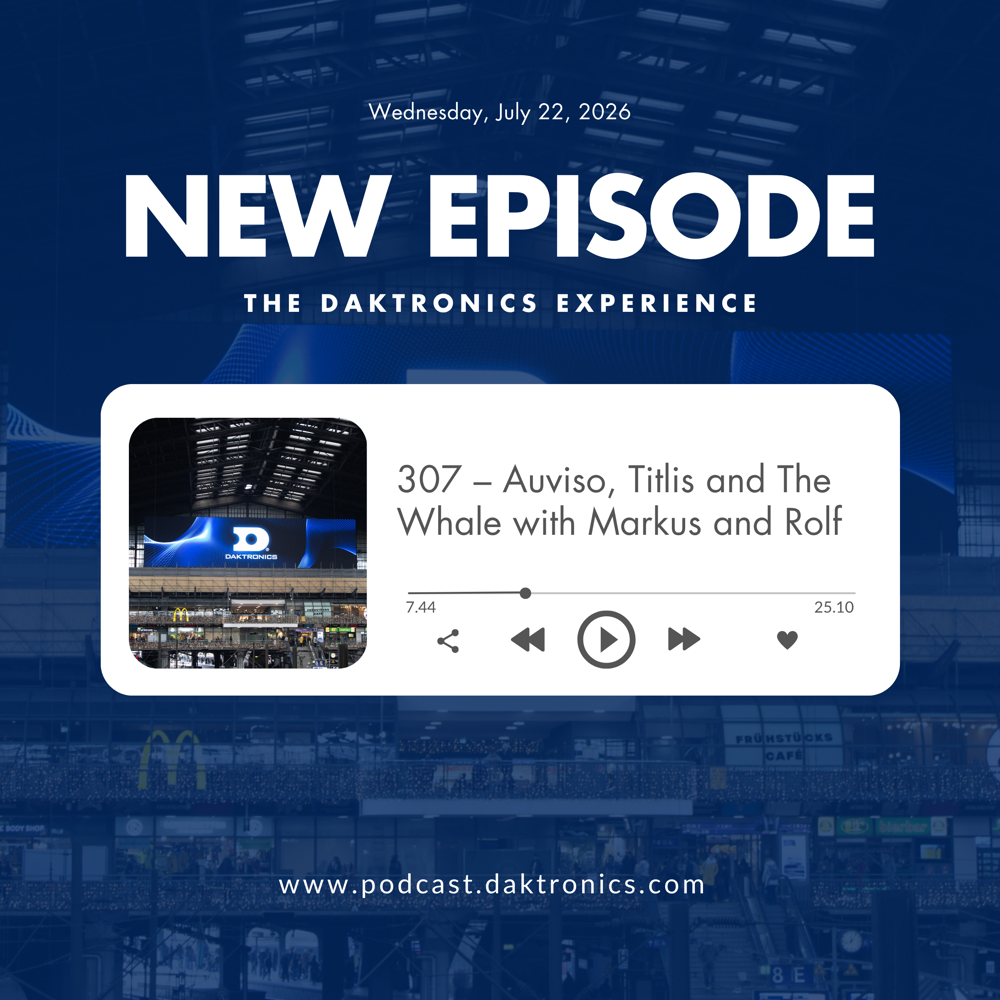
From a mountaintop tunnel experience at Titlis to a massive display in Hamburg Central Station with The Whale, these two projects showcase what's possible when technology, engineering and perseverance come together. Discover the challenges, lessons learned and behind-the-scenes stories that made both installations a success from the latest episode of The Daktronics Experience podcast.
Matt Anderson on 7/24/2026
Categories: Spectaculars, Transportation

One of my favorite parts of hosting The Daktronics Experience podcast is hearing the stories behind projects that most people will never fully appreciate just by looking at the finished display.
Recently, we discussed two installations that couldn't be more different in their settings, yet shared something in common: they pushed the boundaries of what it takes to successfully deliver large-scale LED display projects.
One project brought immersive digital experiences high into the mountains. The other required navigating a century-old transportation hub in the heart of one of Europe's busiest cities. Both demonstrate that the success of a display project often depends on much more than the display itself.
Creating an Immersive Experience at 3,000 Meters
The first project for the Titlis Experience began with the transformation of a former Telekom tower into a public destination. Today, visitors can enjoy a five-star restaurant with panoramic mountain views. Connecting the experience is a tunnel that once served as a maintenance passage but has since been reimagined into an immersive visitor attraction.
Inside that tunnel, LED displays play a critical role in shaping the guest experience.
The installation, in partnership with Daktronics and Auviso, includes two large-format displays, one NPN 1.5mm series and one high-resolution NPN 0.9mm display in a retail environment. One tunnel display incorporates a 120-degree corner, creating a wraparound visual experience that helps draw visitors into the space.
But the LED screens themselves were only part of the challenge.
The site sits approximately 3,000 meters above sea level with no road access. Every piece of equipment had to travel by gondola, moving through multiple lift sections before reaching the mountaintop destination.
Once on site, the environment presented additional obstacles. The displays were installed in a tunnel exposed to high humidity and frequent visitor traffic. Temperatures hovered around 8 degrees Celsius, and technicians worked in reduced air pressure conditions due to the elevation. Even the daily commute required a 40-minute gondola ride each way.
To address these conditions, additional protective coating was applied to the rear side of the display panels. High resolution was also essential to deliver the visual quality visitors would expect in such a premium environment.
What stands out most about this project is how technology was woven into the overall experience. The LED displays aren't simply showing content. They work alongside ambient lighting systems that react to display colors, helping create a cohesive and engaging atmosphere throughout the tunnel.
Bringing a Massive Display to Hamburg's Historic Train Station
While the mountain project challenged teams with geography and environmental conditions, the second project presented a completely different set of hurdles.
Located inside Hamburg Central Station, one of Germany's most recognizable transportation hubs, this installation known as The Whale, required balancing modern technology with the preservation of a historic building.
The project itself was years in the making.
Initial conversations began around 2015. Serious planning efforts started in 2020, followed by a letter of intent in 2022. After numerous site visits and planning sessions, the project finally received approval in 2025 and moved toward installation later that year.
The result is a massive 10mm Daktronics display measuring 38.08 meters wide by 8.96 meters high. With a resolution of 3,808 by 896 pixels, it delivers nearly twice the pixel count of a full HD display stretched across one of Europe's busiest transit environments.
However, installing a display of that scale inside a historic structure was anything but straightforward.
Hamburg Central Station is a protected building with multiple stakeholders involved, including German Rail, the Wandelhalle shopping and food area, and the city of Hamburg. Every aspect of the installation had to respect strict preservation requirements designed to protect the historic architecture.
The engineering challenges were equally complex.
Because portions of the station date back to the early 1900s, little structural documentation was available. Teams had to work carefully to understand load requirements while also managing restrictions created by an existing bunker located beneath the crane service area.
The display itself incorporates additional safety measures, including integrated fire suppression technology within all 390 cabinets to satisfy German Rail requirements.
The Importance of Patience and Partnerships
Although these projects differ dramatically in location and scale, several common themes emerged throughout the discussion.
First, successful projects often require patience. The Hamburg installation took roughly a decade to move from early concepts to completion. Maintaining momentum over that period required flexibility, persistence and a willingness to adapt as requirements evolved.
Second, choosing the right partners matters.
For the Hamburg project, experienced steel and electrical partners helped navigate unique engineering challenges while also working effectively with German Rail and other stakeholders. For the mountain installation, technical expertise and creative problem-solving were critical to overcoming logistical and environmental obstacles.
Finally, both projects demonstrate that major display installations are about much more than hardware specifications. They involve collaboration among engineers, installers, designers, customers, contractors and countless others working behind the scenes to turn ambitious ideas into reality.
Hear the Full Story on The Daktronics Experience
These are just a few highlights from the conversation. The podcast dives deeper into the planning, technical challenges, lessons learned and behind-the-scenes stories that brought both of these projects to life.
If you enjoy hearing how unique display installations come together and what it takes to succeed in challenging environments, be sure to listen to the full episode of The Daktronics Experience. You'll hear directly from the people involved and gain an even greater appreciation for the work that happens long before the first piece of content ever appears on the screen.